
Montana Life Real Estate August 27, 2026
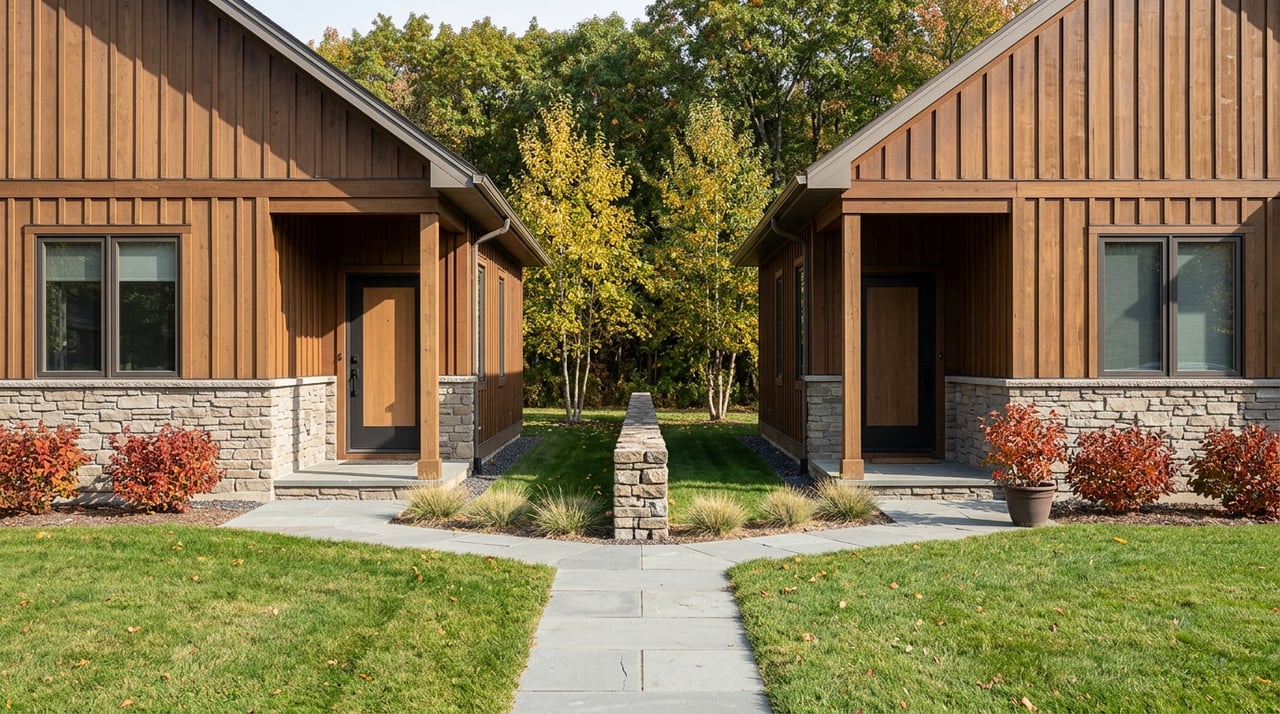
Picture two homes on the same block in the Gallatin Valley. Same builder, same square footage, same closing month. One owner moves in and calls it home. The other keeps it as a place to land a few weekends a year. Come this October, when Gallatin County mails property tax bills, those two owners are going to open envelopes with meaningfully different numbers on the bottom line, and the gap has nothing to do with the house.
It comes down to a form neither owner may have heard of at closing.
Starting with 2026 tax bills, Montana has split residential property into two separate tax tracks. One track rewards owners who live in their home or rent it out long-term. The other, the default track, applies a flat rate to everything else, including the second home a Colorado family buys for ski season and the short-term rental an investor lists on a booking platform. The split was written into law by the 2025 Legislature, and it is not automatic. Whether a buyer lands on the favorable track depends on a filing, a deadline, and in some cases, plain timing that has nothing to do with intent.
If you are shopping the Greater Bozeman Area right now, this is the kind of detail that changes what a home actually costs to hold, and it will not show up in a listing sheet (read more about Bozeman buyer closing costs explained).
Senate Bill 542, carried by Sen. Wylie Galt of Martinsdale, and House Bill 231, carried by Rep. Llew Jones of Conrad, rewrote how Montana taxes residential property. Governor Greg Gianforte signed both in May 2025. The mechanics phased in over two years, and 2026 is the year the real divide shows up.
Here is the shape of it. Homes enrolled as a primary residence, or a qualifying long-term rental, get taxed on a tiered structure that tops out at a 1.9 percent rate. That top rate only applies to the portion of a home's value above the state's lower brackets. Everything below those brackets is taxed at a lower introductory rate, which pulls the effective rate for most homestead-enrolled properties well under 1.9 percent.
Second homes and short-term rentals do not get that graduated treatment. They pay the 1.9 percent rate on every dollar of value, from the first to the last. There is no entry-level bracket, no discount on the lower slice of the home's worth. A second home worth $700,000 and a primary residence worth $700,000 are taxed on entirely different math, even though the county assessor values them the same way.
Montana homeowners have reason to distrust the paperwork that arrives from the Department of Revenue. During the 2023 reappraisal cycle, residential values rose 40 percent on median statewide, and the notices that went out estimated tax increases using the prior year's mill rates, numbers that were guaranteed to change once local governments recalculated. The estimates were wrong for almost everyone, and the confusion was bad enough that the department dropped the estimated-tax line from reappraisal notices entirely starting in 2025, according to Montana Free Press.
That history matters here because it means the homestead split will not come with a warning label either. Your notice tells you what the county thinks your home is worth. It does not tell you which tax track you are on. That determination happens through a separate enrollment process at homestead.mt.gov, and if nobody files the paperwork, the default track applies by default, literally.
The enrollment mechanics are where this becomes a real transaction issue rather than a policy footnote.
Track | Who qualifies | Rate structure |
|---|---|---|
Homestead / Long-term rental | Owner lives there 7+ months a year, or rents it long-term (28+ day leases, tenant's primary residence, 7+ months a year) | Tiered rates, capped at 1.9 percent on the top bracket only |
Everything else | Second homes, vacation homes, short-term rentals | Flat 1.9 percent on the entire assessed value |
Enrollment is not tied to the deed. It is tied to an application window, and the window for the 2026 tax year already closed on March 1, 2026. If you received the 2025 property tax rebate and did not sell or transfer the property, the state carried you over into the homestead track automatically. Everyone else had to apply between December 1, 2025 and March 1, 2026 to be enrolled for this year's bill.
That creates an odd outcome for anyone who bought a home after that window closed. A family that closed on a Bozeman house in April, May, or June of this year, moved in, and fully intends to live there as their primary residence, could not have enrolled in time, because they did not own the property during the application period. Unless the prior owner's homestead status somehow carries forward, which is not how the automatic-enrollment rule is written, that home is likely to land on the default track for this year's bill, the one taxed at a flat 1.9 percent regardless of how the owner actually uses the house.
The good news is that the next window is already open. Applications for the 2027 tax year run from May 4, 2026 through March 1, 2027, a window that covers the rest of this year and most of next. Anyone who missed the cutoff for 2026, or who is closing on a home anytime between now and next March, should file at homestead.mt.gov as soon as the deal closes rather than waiting. Fixing it for 2027 does nothing for this fall's bill, but it prevents the same surprise from repeating next year.
If you're relocating and this will be your primary residence: file for the Homestead Reduced Rate the moment you close, even if it is too late to affect this year's bill. The application takes your address, geocode, and Social Security number, and it is worth doing before it slips your mind during a move.
If you're buying as an investment and plan to rent it long-term: the same reduced rate is available to you, but it requires enrolling the property as a long-term rental separately, with leases of 28 days or longer where the tenant treats it as their residence for at least seven months a year. A short-term rental strategy does not qualify, and neither does leaving a unit vacant between tenants for long stretches.
If you're buying a second home for occasional use: build the flat 1.9 percent rate into your holding cost from the start. There is no filing that gets a true second home onto the lower track, and the rate applies to the full value of the property, not just the portion above some threshold. For higher-value purchases in the Gallatin Valley, that is a real number to run before you write an offer, not something to discover on the first tax bill.
Median home prices in Bozeman have held close to flat this year. Redfin put the median sale price at $672,000 over the three months ending May 2026, up just 1.1 percent year over year, and separate local tracking placed the Q2 2026 median at $702,500, unchanged from the first quarter. Prices are not the variable moving right now. Carrying cost, driven by which tax track a home lands on, is quietly doing more work than the sale price to determine what two otherwise identical homes will actually cost their owners each year (see what your Bozeman home could sell for now).
One more thing worth knowing before you plan around this system. A lawsuit challenging SB 542 as unconstitutional was still pending as of June 2026, according to reporting from the Daily Montanan. Nothing about the current enrollment process has changed as a result, and homeowners are still expected to file under the existing rules. But the legal status of the framework itself is not fully settled, and it is the kind of detail worth watching if you are making a long-term investment decision based on the tax gap between tracks.
Does moving into my new home automatically get me the lower rate this year? No. Enrollment is a separate filing, and it is tied to a calendar window, not to your move-in date or your intentions for the property.
I already own a place in the valley and I'm thinking about renting it out long-term instead of keeping it as a second home. Does that change my tax track? It can, but you have to apply for the long-term rental reduced rate specifically, and the lease terms have to meet the 28-day, 7-month standard. Simply changing how you use the property does not change your rate until the paperwork catches up.
Is the 1.9 percent flat rate final, or could the numbers shift again? The rate structure took effect for 2026 under state law, but litigation is ongoing. For now, plan around the rules as written, and check the Montana Department of Revenue's homestead page for any updates before you file.
None of this is tax or legal advice, and every property's exact numbers will depend on its own value, location, and taxing districts. But if you're comparing homes in Bozeman, Belgrade, or Four Corners this fall, the sale price is only half the math. The other half is a filing status that has nothing to do with square footage and everything to do with a deadline most buyers never see coming.
If you're working through what a specific property in the Greater Bozeman Area will actually cost to hold, not just to buy—whether you are evaluating homes with acreage, farm and ranch properties, or horse properties—our team of Montana land and acreage specialists at Montana Life Real Estate can walk you through the numbers before you write an offer. Schedule a consultation and we'll help you sort out what matters from what's just noise on the notice.
Stay up to date on the latest real estate trends.

Get assistance in determining current property value, crafting a competitive offer, writing and negotiating a contract, and much more. Contact us today.